HomeApplicationsWater Treatment

Water Treatment

Reliable DC power for cathodic protection, electrolytic disinfection, electrochlorination, and electrocoagulation — protecting infrastructure and ensuring water quality.

10A – 3,000A
RS485 Control
IP54 Rated
Application Requirements

What Water Treatment Needs
from a Power Supply

Cathodic Protection — Impressed Current Systems

Cathodic protection prevents corrosion of buried or submerged metallic structures — pipelines, water storage tanks, treatment plant reinforcement, and marine infrastructure. Impressed current cathodic protection (ICCP) systems use a DC power supply to force protective current from inert anodes (mixed metal oxide, silicon iron, or graphite) through the electrolyte to the structure being protected. The rectifier must maintain a stable, regulated DC output regardless of soil resistivity changes, seasonal water table fluctuations, and anode degradation over time. Most ICCP installations require continuous, uninterrupted operation — 24 hours a day, 365 days a year — making long-term reliability and low maintenance the primary selection criteria.

Electrochlorination and Electrolytic Disinfection

On-site electrochlorination generates sodium hypochlorite by passing DC current through a brine solution or directly through seawater. The process demands stable, low-ripple DC to maintain consistent chlorine production rates and maximise electrode cell life. Excessive ripple accelerates erosion of the titanium or mixed metal oxide electrode coatings, significantly increasing consumable costs. Similarly, electrolytic disinfection systems for municipal and industrial water supplies rely on precisely controlled DC to generate oxidants at predictable rates for reliable pathogen inactivation.

Electrocoagulation for Wastewater

Electrocoagulation uses sacrificial iron or aluminium electrodes energised by DC current to destabilise suspended solids, emulsified oils, and dissolved heavy metals in wastewater streams. The rectifier must support polarity reversal to prevent passivation of the electrode surfaces and maintain treatment efficiency. Water treatment infrastructure operates around the clock, and unplanned downtime can result in environmental compliance failures and discharge permit violations. Power supplies for these applications must be robust, remotely monitorable, and rated for harsh, humid environments — IP54 minimum with corrosion-resistant enclosures.

Key Requirements
<2% ripple for electrode life and protection efficiency
100% continuous duty cycle — 24/7/365 operation
RS485 / PROFIBUS / TCP-IP for SCADA integration
Remote monitoring and alarm outputs for unmanned sites
IP54+ enclosure for humid, corrosive environments
Extended maintenance intervals for remote infrastructure
Technical Parameters

Water Treatment Process Specifications

Typical operating parameters for cathodic protection, electrochlorination, and electrocoagulation systems.

Parameter Typical Range Notes
Current Range 10 – 3,000A ICCP typically 10–100A; electrochlorination up to 3,000A
Voltage Range 0 – 48V DC ICCP 10–48V depending on soil resistivity; electrolysis cells 4–12V
Ripple Tolerance < 2% Lower ripple extends electrode life and improves current distribution
Duty Cycle 100% continuous Critical infrastructure requires uninterrupted 24/7 operation
Environmental Rating IP54+ Dust-tight; splash-proof; corrosion-resistant enclosure options
Remote Monitoring RS485 / PROFIBUS SCADA integration for unmanned sites; alarm and fault outputs
Maintenance Interval 12 – 24 months Fan filter inspection; connection torque checks; firmware updates
Recommended Products

Rectifiers for Water Treatment

Scroll through our recommended units for cathodic protection, electrochlorination, and electrocoagulation applications.
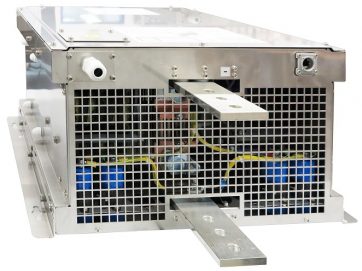
PE 3000 Series
PE 3000 Series
10A – 3,000A · RS485 standard
Reliable IGBT switchmode rectifier with RS485 communication as standard for SCADA integration. Low ripple output extends electrode and anode life in cathodic protection and electrochlorination systems. IP54 enclosure options available for outdoor and wet installations.
Primary Pick View Product →
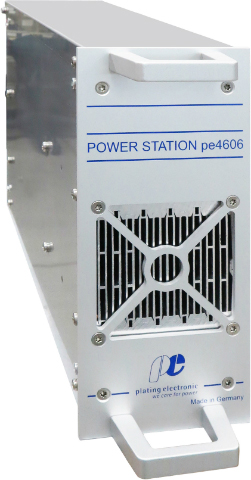
PE 4000 Series
PE 4000 Series
20A – 2,200A+ · TCP/IP networking
High-current rectifier with TCP/IP and PROFIBUS networking for advanced remote monitoring and data logging. Parallelable architecture for large electrochlorination plants. Full digital control via pe280 with alarm outputs and fault logging for unmanned operation.
Primary Pick View Product →
SCR Rectifiers
SCR Rectifiers
Custom builds · Legacy upgrades
Melbourne-built conventional SCR rectifiers for legacy system replacements and custom specifications. Copper-wound transformers for maximum durability. Ideal for upgrading ageing cathodic protection installations where existing infrastructure dictates the form factor.
Also Suitable View Product →
Technical Deep Dive

Why Ripple Matters
in Water Treatment

Output ripple directly affects protection effectiveness, electrode longevity, and overall system operating costs.

Cathodic Protection Effectiveness

Uniform, low-ripple DC ensures consistent current distribution across the protected structure. High ripple creates periodic under-protection zones where corrosion can initiate, particularly at coating holidays and at the extremities of the protected zone. Reducing ripple from 5% to below 2% can extend the effective protection radius of each anode by 15–20%.

Electrode and Anode Life

In electrochlorination cells, AC ripple superimposed on the DC output accelerates erosion of the mixed metal oxide coating on titanium electrodes. High ripple effectively increases the peak voltage beyond the design window of the coating, causing premature failure. Low-ripple IGBT rectifiers can double electrode cell life compared to SCR-powered installations.

System Efficiency

IGBT switchmode rectifiers convert AC to DC at over 93% efficiency compared to 75–85% for thyristor designs. For a continuously running cathodic protection or electrochlorination system, the energy savings over a 10-year asset life are substantial, often exceeding the original equipment cost differential.

Remote Monitoring and Compliance

Water infrastructure operators must demonstrate continuous cathodic protection to comply with AS 2832 and other pipeline integrity standards. RS485 and TCP/IP interfaces allow remote logging of output voltage, current, and structure-to-soil potential — providing the audit trail regulators require without dispatching field technicians.

Specification IGBT Switchmode SCR / Thyristor
Output Ripple < 2% 5 – 10%
Efficiency > 93% 75 – 85%
Electrode Life 2x longer Baseline
Remote Monitoring RS485 / TCP-IP Analogue only
Maintenance Interval 12 – 24 months 6 – 12 months
Case Study

Proven in the Field

Water Treatment Infrastructure — Cathodic Protection Upgrade
Australian water utilities and pipeline operators rely on our IGBT rectifiers for impressed current cathodic protection of critical infrastructure. Upgrading from ageing SCR units to PE 3000 and PE 4000 series rectifiers has delivered measurable improvements in protection uniformity, energy consumption, and remote monitoring capability. Contact us for details on installations relevant to your project.
Read Case Study →

Spec a System for Water Treatment

Tell us your application — cathodic protection, electrochlorination, or electrocoagulation — and our technical team will recommend the right rectifier, communication interface, and enclosure rating. Free of charge.

Request a Quote
AR Technical Support
Online
Hi! I see you're looking at water treatment power supplies. I can help with cathodic protection rectifier selection, electrochlorination sizing, or technical specs. What's your application?
Cathodic protection
Electrochlorination
IP ratings
Remote monitoring