HomeApplicationsLaboratory & R&D

Laboratory & R&D

Precision variable DC and AC power for research laboratories, testing facilities, and electrochemical process development — from bench-top to pilot scale.

50A – 600A
Variable AC/DC
Bench to Pilot
Application Requirements

What Laboratory & R&D Needs
from a Power Supply

Precision and Repeatability

Research environments demand power supplies that deliver precisely repeatable output under varying load conditions. Whether running electrochemical impedance spectroscopy, corrosion testing, or small-scale plating trials, the rectifier must hold voltage and current to within tight tolerances — typically ±0.5% or better. Without this level of precision, experimental results become unreliable and inter-run comparisons meaningless. IGBT switchmode technology provides the regulation accuracy and stability that laboratory work requires, with digital readouts and logging for complete traceability.

Wide Adjustability and Variable Output

Unlike production environments where a rectifier runs at a fixed setpoint, laboratory applications require continuous adjustability across the full voltage and current range. Researchers need to sweep parameters, run potentiostatic or galvanostatic holds, and quickly reconfigure between experiments. Variable auto transformers (variacs) provide smooth, stepless AC voltage adjustment for heating, motor testing, and transformer evaluation. DC rectifiers with fine resolution controls enable precise current-density mapping and process development work that translates directly to production-scale parameters.

Compact Footprint and Safety

Laboratory bench space is at a premium. Power supplies must be compact, well-ventilated, and designed for safe operation in close proximity to researchers. Safety features including output isolation, over-current and over-voltage protection, thermal cutouts, and earth-leakage monitoring are essential. For pilot-scale work, modular systems that can be expanded as research progresses from coupon testing to larger electrode areas allow capital investment to scale with the project rather than requiring over-specification from day one.

Key Requirements
<1% ripple for research reproducibility and accurate measurements
±0.5% regulation accuracy for repeatable experimental results
Wide voltage and current adjustability from zero to full scale
Output isolation, OCP, OVP, and thermal protection as standard
Compact bench-top form factor with low acoustic noise
RS485 / USB / analogue interfaces for data acquisition integration
Technical Parameters

Laboratory Power Supply Specifications

Typical operating parameters for laboratory and R&D power supply applications. Actual requirements vary by research discipline and experimental protocol.

Parameter Typical Range Notes
Current Range 1 – 600A Bench-top units from 1A; pilot-scale to 600A
Voltage Range 0 – 600V DC Low-voltage electrochemistry 0–18V; high-voltage testing to 600V
Resolution 0.1% of full scale Fine adjustment for parameter sweeps and potentiostatic holds
Ripple < 1% (IGBT) Critical for electrochemical measurement accuracy
Stability ± 0.5% over 8 hrs Long-term drift must be within experimental error budget
Safety Features OCP / OVP / Thermal Over-current, over-voltage, thermal cutout, earth-leakage protection
Communication RS485 / USB / Analogue Data logging and external control via LabVIEW, SCADA, or custom DAQ
Recommended Products

Power Supplies for Laboratory & R&D

Our recommended units for laboratory and research applications — precision DC rectifiers and variable AC transformers for bench-top to pilot-scale work.
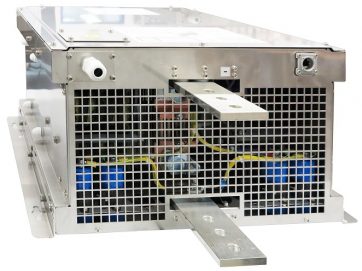
PE 1000 Series
PE 1000 Series
50A – 600A · 0–18V DC
Compact IGBT switchmode rectifier ideal for laboratory electrochemistry, small-scale plating trials, and corrosion testing. Delivers <1% ripple with fine current and voltage adjustment. RS485 communication for integration with LabVIEW and data acquisition systems. Amp-hour totalisation for precise deposit control during process development.
Primary Pick View Product →
Dimmer Dot Variacs
Dimmer Dot Variacs
Variable AC · 0–270V · Single & Three Phase
Smooth, stepless variable AC voltage control for heating element testing, motor characterisation, transformer evaluation, and general laboratory AC power requirements. Available in bench-top, panel-mount, and enclosed configurations. Air-cooled and oil-cooled models for continuous-duty laboratory and pilot-plant applications.
Primary Pick View Product →
Technical Deep Dive

Why Ripple Matters
in Laboratory & R&D

In research environments, output ripple directly impacts measurement accuracy and experimental reproducibility. Clean DC power is not optional — it is fundamental.

Research Reproducibility

Experiments conducted with high-ripple power supplies introduce an uncontrolled variable into every run. The periodic AC component superimposed on the DC output affects reaction kinetics, deposition rates, and electrochemical measurements in ways that are difficult to quantify and impossible to reproduce between labs using different rectifier types. Sub-1% ripple eliminates this variable from the experimental error budget.

Accurate Electrochemical Measurements

Techniques such as linear sweep voltammetry, chronoamperometry, and electrochemical impedance spectroscopy require stable, noise-free DC excitation. Ripple manifests as periodic noise in the measured response, obscuring small signals and reducing the sensitivity of analytical methods. IGBT switchmode rectifiers deliver the clean output these precision measurements demand.

Scale-Up Confidence

Process parameters developed in the laboratory must translate reliably to pilot and production scale. If lab-scale work is performed with a low-ripple IGBT rectifier, the results will be directly comparable to production runs on the same technology. Starting with an SCR rectifier in the lab and switching to IGBT at scale introduces an unmeasured process change that can invalidate months of development work.

Sensitive Instrumentation Protection

Laboratory environments often connect power supplies to sensitive analytical instruments, reference electrodes, and data acquisition systems. High-ripple rectifiers can inject electrical noise into measurement circuits through ground loops and capacitive coupling, degrading signal-to-noise ratios across the entire experimental setup. Clean IGBT power protects your instrumentation investment.

Specification IGBT Switchmode SCR / Thyristor
Output Ripple < 1% 4 – 8%
Regulation Accuracy ± 0.5% ± 2 – 5%
Output Noise (RMS) < 50 mV 200 – 800 mV
Transient Response < 100 ms 200 – 500 ms
Measurement Interference Negligible Significant
Case Study

Proven in Research

University Research Lab — Electrochemical Process Development
Case study coming soon. Our PE 1000 Series and Dimmer Dot Variacs are used by research institutions across Australia for electrochemical process development, corrosion testing, and materials characterisation. Contact us to discuss your laboratory power requirements.
Read Case Study →

Spec a System for Your Laboratory

Tell us your research application, voltage and current requirements, and bench or pilot scale. Our technical team will recommend the right power supply configuration — free of charge.

Request a Quote
AR Technical Support
Online
Hi! I see you're looking at laboratory and R&D power supplies. I can help with selecting the right unit for your research application, sizing, or technical specs. What are you working on?
Electrochemistry
Variable AC
Bench vs Pilot
Ripple explained