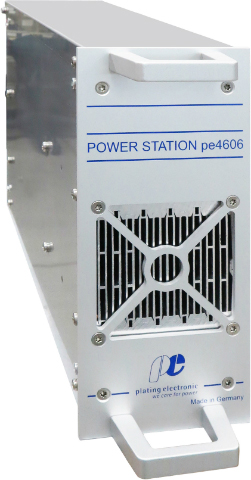
Precision DC power for PEM and alkaline electrolysis — supporting Australia’s clean energy transition with scalable, efficient IGBT rectification.
Green hydrogen is produced by splitting water into hydrogen and oxygen using DC electricity from renewable sources. The electrolyser passes current through an electrolyte (alkaline KOH solution or a proton exchange membrane) to drive the reaction. Each cell requires 1.6–2.2V DC depending on technology and current density. Commercial electrolysers stack hundreds of cells in series, requiring total stack voltages of several hundred volts and currents from 1,000A to 60,000A or more. The rectifier converts grid or renewable AC power into the precise, stable DC required by the stack — and its efficiency directly determines the overall cost of hydrogen production.
PEM (Proton Exchange Membrane) electrolysers operate at higher current densities (1–2 A/cm²) and can respond rapidly to variable renewable power input, making them well-suited to wind and solar coupling. They require extremely clean, low-ripple DC to protect the expensive membrane and catalyst layers. Alkaline electrolysers use a KOH solution at lower current densities (0.2–0.5 A/cm²) and are the proven workhorse technology for large-scale production. Both technologies benefit from IGBT switchmode rectifiers that combine high efficiency (>93%), low ripple (<1%), and fast current ramp rates for load-following operation with intermittent renewable generation.
Australia’s green hydrogen ambitions — including the $6 billion Hydrogen Headstart program — require electrolyser installations scaling from pilot (1–10 MW) to commercial production (100+ MW). The rectifier system must be modular and parallelable to grow with production capacity. Industry 4.0 connectivity (OPC-UA, Profinet, Modbus TCP) enables integration into plant-wide energy management systems that optimise hydrogen production against renewable availability, electricity price, and storage capacity. Fast ramp rates (millisecond response) allow the rectifier to follow variable renewable input without compromising electrolyser health.
Typical operating parameters for PEM and alkaline water electrolysis. Values vary by stack manufacturer and operating conditions.
| Parameter | Typical Range | Notes |
|---|---|---|
| Current Density | 0.5 – 2 A/cm² | PEM: 1–2 A/cm²; Alkaline: 0.2–0.5 A/cm² |
| Cell Voltage | 1.6 – 2.2V per cell | Thermodynamic minimum 1.23V; overpotential adds 0.4–1.0V |
| Stack Voltage | 100 – 600V DC | Depends on cells in series; typically 200–400V for MW-scale |
| Ripple Tolerance | < 1% (IGBT) | Critical for membrane life in PEM; reduces degradation rate |
| Rectifier Efficiency | > 93% | Every 1% efficiency loss increases hydrogen cost per kg |
| Ramp Rate | < 100 ms to full load | Enables load-following with variable renewable input |
Scroll through our recommended units for electrolysis applications — from pilot-scale R&D to commercial hydrogen production facilities.
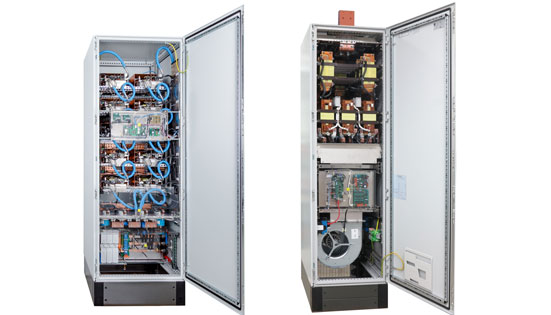
In electrolysis, ripple directly impacts cell degradation, membrane life, and overall system efficiency. The economics are critical at scale.
PEM electrolysers use expensive perfluorosulfonic acid membranes (such as Nafion) that are sensitive to current fluctuations. Ripple-induced oscillations cause localised heating, mechanical stress from expansion/contraction cycles, and accelerated catalyst degradation. Studies show that reducing ripple from 5% to <1% can extend membrane life by 20–30%, significantly reducing stack replacement costs over a 10–20 year project life.
Ripple increases the RMS current above the DC average, generating additional ohmic losses in the stack without proportional hydrogen production. At high current densities, these parasitic losses can reduce system efficiency by 1–3 percentage points. With electricity representing 60–70% of hydrogen production cost, even a 1% efficiency improvement translates to meaningful savings at commercial scale — tens of millions of dollars over a plant’s lifetime.
Current ripple can cause periodic gas crossover between the hydrogen and oxygen sides of the cell, degrading gas purity. In PEM systems, excessive oxygen in the hydrogen stream is a safety concern and may require additional purification. Clean DC from IGBT rectifiers minimises crossover, maintaining hydrogen purity above 99.999% without additional separation stages.
Green hydrogen projects must match electrolysis load to variable renewable generation. IGBT rectifiers with <100 ms ramp rates can follow solar and wind output in real time, maximising renewable utilisation and avoiding grid power consumption. Combined with >93% conversion efficiency, this enables the lowest possible cost per kilogram of green hydrogen — the key metric for project viability.
Tell us your electrolyser type (PEM or alkaline), stack configuration, target production rate, and renewable power profile. Our technical team will recommend the right rectifier architecture — free of charge.
Request a Quote